
Abstract The debate on Whether and what a Kosovar identity may be, is a delicate subject overloaded with political nuances. In this article, I elaborate on the concept of ‘nested identities’ and propose a model of how one can conceptualize Kosovo’s identity. The model onsiders identity as a multi-layered concept with
Author: admin
Dynamics of Eastern Europeanisation and the Impact of “Membership Credibility” in EU Enlargement Rounds
Abstract Research on EU enlargement-led Europeanisation has extensively focused on countries from Central Eastern Europe (CEE) and only recently enriched with studies dealing with specific issues and/or countries of the Western Balkans. Yet, a more comprehensive study across current and previous potential member-state countries is needed. This article assesses to what
The Politics of EU Enlargement Revisited – What conditions matter in the case of the EU’s South-Eastern enlargement?
There are considerable variations in the pace and speed of EU’s South-Eastern enlargement. Bulgaria and Romania joined European Union (EU) in 2007, Croatia became the 28th member-state only in July 2013 while the rest of the South-East European (SEE) countries are facing uncertainty about the time they will join the
Compliance with EU Legislation in the Pre-Accession Countries of South East Europe (2005–2011): A Fuzzy-set Qualitative Comparative Analysis
Abstract Compliance with European Union (EU) law and the related causal factors have been theoretically argued and empirically tested in the case of EU member-states and pre-accession countries of Central Eastern Europe. The article examines several theoretical and empirical conditions under which candidate countries of South East Europe (SEE) plausibly comply
Religion Tolernace: International Peace Day
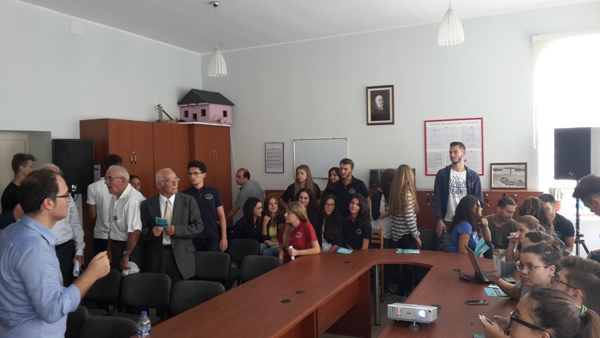
Venue: High School “28 Nentori”, Shkoder The forth public meeting was held in Shkodra, with participation of high school students and civil society representatives. The Deputy Head of Mission of the Embassy of the Kingdom of the Netherlands, Mr. Jurgen van Meirvenne underlined the culture of tolerance of Shkodra people and
Dynamics of the Contemporary South-Eastern Europe: Nation-building, Democratization and European Integration

26-27 May, Skopje, Macedonia: • Transition in the Western Balkans: The End of a Journey or Quest for a Second Transition? Prof. Dr. Stevo Pendarovski, University American College Skopje • General Elections in Macedonia and the Political Aftermath, Darko Aleksov, Citizens Association MOST • Migration as One of the Challenges of Europe’s Today,
Women Leadership in the Local Government
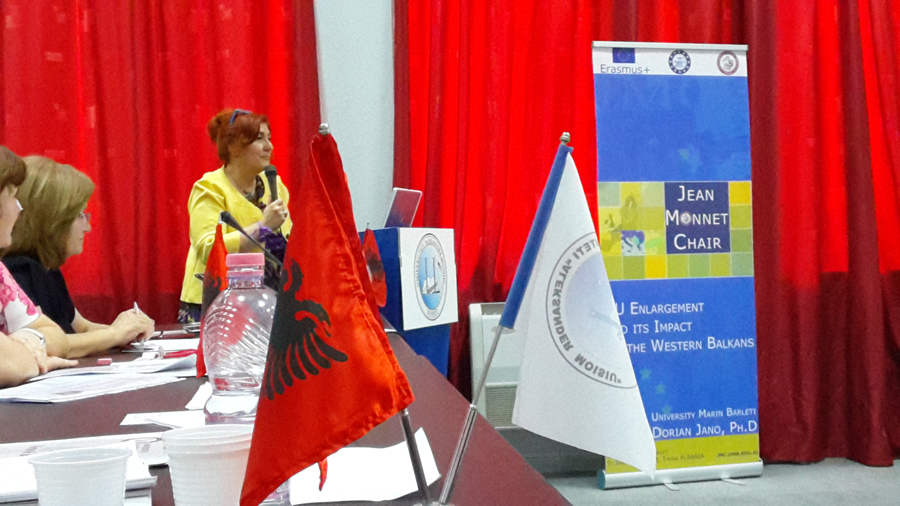
Venue: Hall of the Faculty of Education Sciences, University Alexander Moisiu, Durres The third public talk was held in Durres, at the Faculty of Education, ‘Aleksander Moisiu’ University. Mrs. Dewi van de Weerd, Ambassador of the Kingdom of the Netherlands, and Dr. Englantina Gjermeni, Minister of Urban Development honored this event
LGBT Rights: How to Deal with Sensitive Issues?

Venue: Conference Hall, Marin Barleti University, Tirana The roundtable was moderated by Dr. Ervis Martani, who stressed that the issue of LGBT rights remains taboo not only for the Albanian society but also in other countries although it is the subject of the recent policies and decisions of the European Union.
Romani Integration in Albania

Venue: Hall of the Faculty of Education Sciences, University Alexander Xhuvani, Elbasan The first series of the public talks was held in Elbasan, at the Faculty of Education Science of ‘Aleksander Xhuvani’ University. The meeting was opened by Dr. Dorian Jano, Jean Monnet Chair, introducing the initiative. Dr. Imelda Sejdini, Deputy
DG NEAR’s Director General Christian Danielsson visits Tirana

Director General of DG NEAR Christian Danielson visited Tirana today to discuss Albania’s progress towards the five key priorities. Mr Danielson met with President Bujari Nishani, Speaker Ilir Meta, Prime Minister Edi Rama and Opposition Chair Lulzim Basha. In his meetings, Mr Danielson noted the country’s progress towards the achievement of