
Abstract ... Read More Here Discussion Paper No 2/2012, July Dorian Jano, (2012)
Month: November 2015
Discussing Gender Equality: Against Any Gender-Based Violence

Venue: University ‘Ismail Qemali’, Vlora The open debate on gender equality was held at the University ‘Ismail Qemali’ in Vlora. The meeting was attended by Mr. Jurgen van Meirvenne the Deputy Ambassador of the Kingdom of the Netherlands, Mrs. Vojsava Shkurtaj Chairwoman of the City Council in Vlora, and Prof. Albert Qarri
Kosovar Multi-Layer Identity: What is the Same, Different and in Common with Albanian Identity

Abstract The debate on Whether and what a Kosovar identity may be, is a delicate subject overloaded with political nuances. In this article, I elaborate on the concept of ‘nested identities’ and propose a model of how one can conceptualize Kosovo’s identity. The model onsiders identity as a multi-layered concept with
Dynamics of Eastern Europeanisation and the Impact of “Membership Credibility” in EU Enlargement Rounds
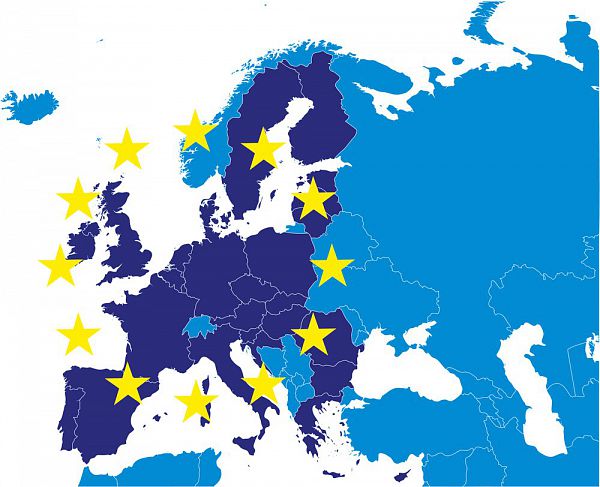
Abstract Research on EU enlargement-led Europeanisation has extensively focused on countries from Central Eastern Europe (CEE) and only recently enriched with studies dealing with specific issues and/or countries of the Western Balkans. Yet, a more comprehensive study across current and previous potential member-state countries is needed. This article assesses to what
The Politics of EU Enlargement Revisited – What conditions matter in the case of the EU’s South-Eastern enlargement?
There are considerable variations in the pace and speed of EU’s South-Eastern enlargement. Bulgaria and Romania joined European Union (EU) in 2007, Croatia became the 28th member-state only in July 2013 while the rest of the South-East European (SEE) countries are facing uncertainty about the time they will join the
Compliance with EU Legislation in the Pre-Accession Countries of South East Europe (2005–2011): A Fuzzy-set Qualitative Comparative Analysis
Abstract Compliance with European Union (EU) law and the related causal factors have been theoretically argued and empirically tested in the case of EU member-states and pre-accession countries of Central Eastern Europe. The article examines several theoretical and empirical conditions under which candidate countries of South East Europe (SEE) plausibly comply